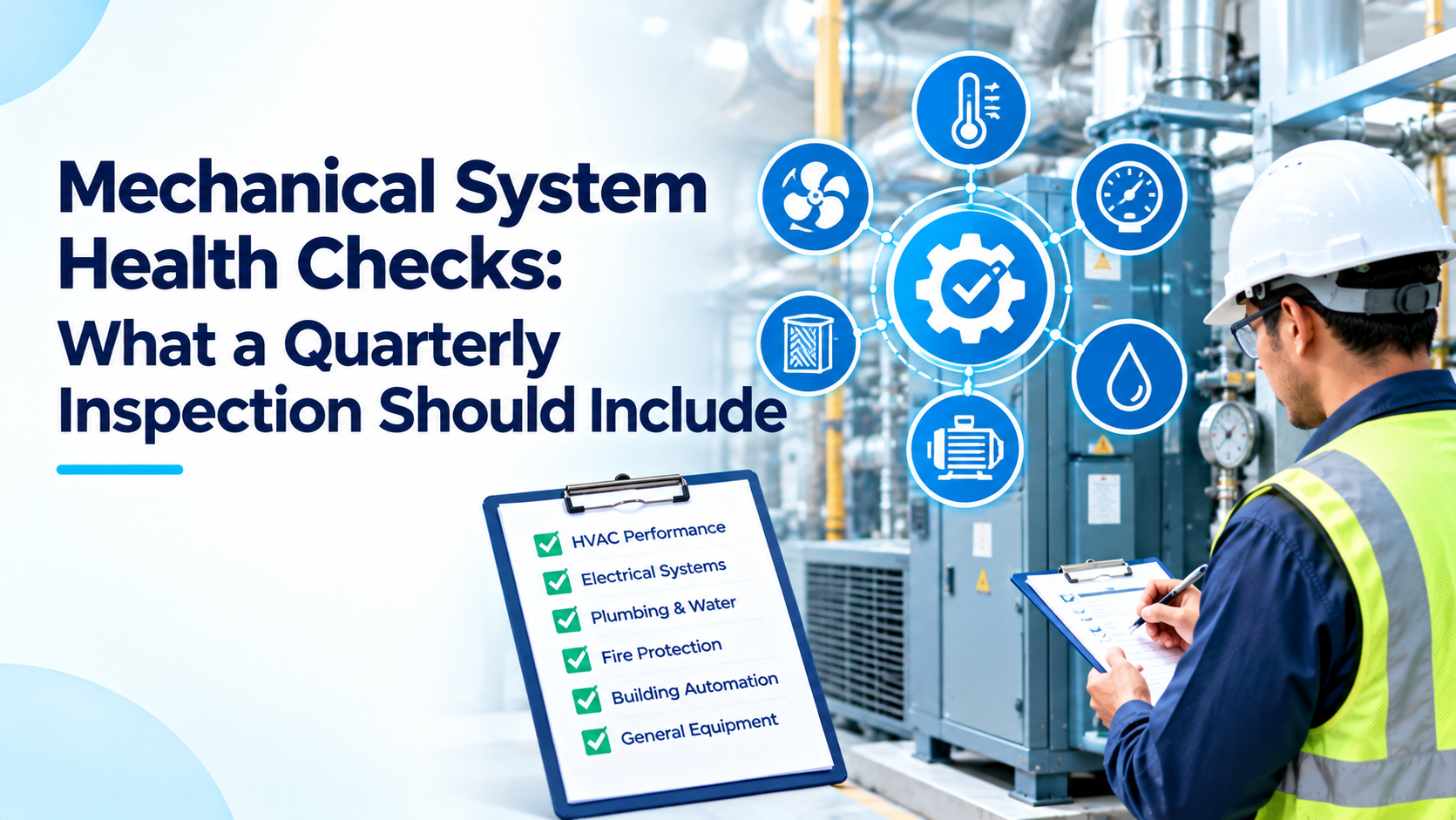
Mechanical System Health Checks: What a Quarterly Inspection Should Include
A quarterly mechanical system health check is a scheduled, documented inspection of a building’s HVAC,
chillers, pumps, fans, and related equipment, designed to catch wear, leaks, and efficiency losses before they cause breakdowns. For commercial properties, a structured quarterly routine delivered by reliable mechanical services is one of the simplest ways to protect uptime, tenant comfort, and energy bills.
This guide explains what a quarterly inspection should cover, what technicians should record, and how to tell a thorough check from a quick walkthrough.
What Is a Mechanical System Health Check?
A mechanical health check is a hands-on assessment of the machinery that keeps a building running. Technicians inspect, measure, test, and record the condition of each system, then report faults and recommend repairs in priority order.
It goes beyond routine servicing. Servicing keeps equipment running today, while a health check shows how it is likely to perform over the coming months.
Why Do Commercial Buildings Need Quarterly Inspections?
Mechanical equipment works long hours and degrades gradually. A three-month interval is frequent enough to catch problems early without disrupting operations. Quarterly checks help in four ways:
- Early fault detection: Small issues such as a worn belt or a minor leak are fixed before they cause failure.
- Lower energy use: Clean coils, correct refrigerant levels, and calibrated controls keep efficiency high.
- Longer equipment life: Regular lubrication and alignment checks reduce wear on motors and bearings.
- Fewer emergencies: Planned repairs cost less than breakdown repairs during peak demand.
What Should a Quarterly Mechanical Inspection Include?
Scope depends on the equipment installed, but a thorough inspection usually covers the following.
|
System |
Key checks |
|---|---|
|
AHUs and HVAC units |
Filters, coils, belts, blowers, drain pans, and airflow |
|
Chillers |
Refrigerant pressure, condenser and evaporator temperatures, oil level, and alarms |
|
Cooling towers |
Water quality, fill condition, fan and motor, basin cleanliness |
|
Pumps and motors |
Vibration, noise, seals, alignment, bearing temperature, and leaks |
|
Pipes, valves, insulation |
Leaks, corrosion, valve operation, and insulation damage |
|
Fans and compressors |
Lubrication, belt tension, mounting, and unusual noise |
|
Controls and sensors |
Thermostat calibration, setpoints, sensor accuracy, and alarm tests |
HVAC and chiller performance
Cooling is usually the largest mechanical load, so it deserves the most attention. Technicians should compare current readings with design values and previous quarters, because a gradual drift in temperature or pressure often signals a developing fault. Property managers who prefer one accountable partner often choose integrated mechanical solutions that cover inspection, repair, and spare parts together.
Pumps, motors, and moving parts
Rotating equipment shows trouble early through vibration, heat, and noise. A good inspection measures these rather than relying on a quick listen, and checks lubrication, alignment, and coupling condition. Catching a failing bearing at this stage is far cheaper than replacing a seized motor.
What Should Technicians Record During an Inspection?
A health check is only useful if it leaves a clear record. Ask for a written report that includes:
- Measured readings such as temperatures, pressures, and motor current
- Condition notes for each asset, with photos where possible
- Parts replaced or adjusted during the visit
- Faults found, ranked by urgency
- Recommended actions with estimated timelines
- The date of the next scheduled inspection
What Signs Mean You Should Inspect Sooner?
Do not wait for the next quarter if you notice any of these warning signs:
- Rising energy bills without a change in usage
- Uneven cooling or hot spots across floors
- Unusual noise, vibration, or burning smells from equipment
- Frequent tripping or alarms
- Water leaks around pumps, valves, or drain pans
- Filters clogging faster than normal
How Do Monthly, Quarterly, and Annual Checks Differ?
|
Frequency |
Typical focus |
|---|---|
|
Monthly |
Visual checks, filter cleaning, and logging key readings |
|
Quarterly |
Detailed inspection, lubrication, calibration, and performance testing |
|
Annual |
Major overhaul, deep cleaning, component replacement, and compliance testing |
These layers work together. Monthly checks keep systems tidy, quarterly checks catch developing faults, and the annual overhaul resets equipment for the year ahead.
How to Choose a Mechanical Inspection Provider
Experience and accountability matter more than the lowest quote. Look for professional mechanical services that can demonstrate the following:
- Proven experience with commercial HVAC, chillers, and pumping systems.
- Certified technicians with the right tools and test instruments.
- A written inspection checklist and standard report format.
- Clear response times for urgent faults.
- Access to spare parts and a defined escalation process.
- References from similar commercial properties.
What Mistakes Should You Avoid?
- Treating a quick visual walkthrough as a full inspection
- Failing to compare readings with previous quarters
- Ignoring minor alarms and deferring small repairs
- Skipping written reports, which removes accountability
- Postponing inspections during busy periods
Key Takeaways
- A quarterly health check measures and records equipment condition, not just cleans it.
- HVAC, chillers, pumps, and controls deserve the closest attention.
- Trend data across quarters reveals problems a single visit cannot.
- Written reports and clear priorities make maintenance spending easier to plan.
Frequently Asked Questions
What is included in a quarterly mechanical inspection?
It typically covers HVAC units, chillers, cooling towers, pumps, motors, valves, fans, and controls, with measured readings, condition notes, and a prioritised report.
How often should commercial mechanical systems be inspected?
Most commercial properties benefit from monthly checks, a detailed quarterly inspection, and a full annual overhaul.
What is the difference between servicing and a health check?
Servicing keeps equipment running through cleaning and adjustment, while a health check measures performance, finds developing faults, and recommends actions.
Can quarterly inspections reduce energy costs?
Yes. Clean coils, correct refrigerant levels, and calibrated controls help equipment run efficiently, which lowers power consumption.
Should inspections be part of an AMC?
Yes. Including scheduled quarterly inspections in an Annual Maintenance Contract keeps the routine consistent and the costs predictable.