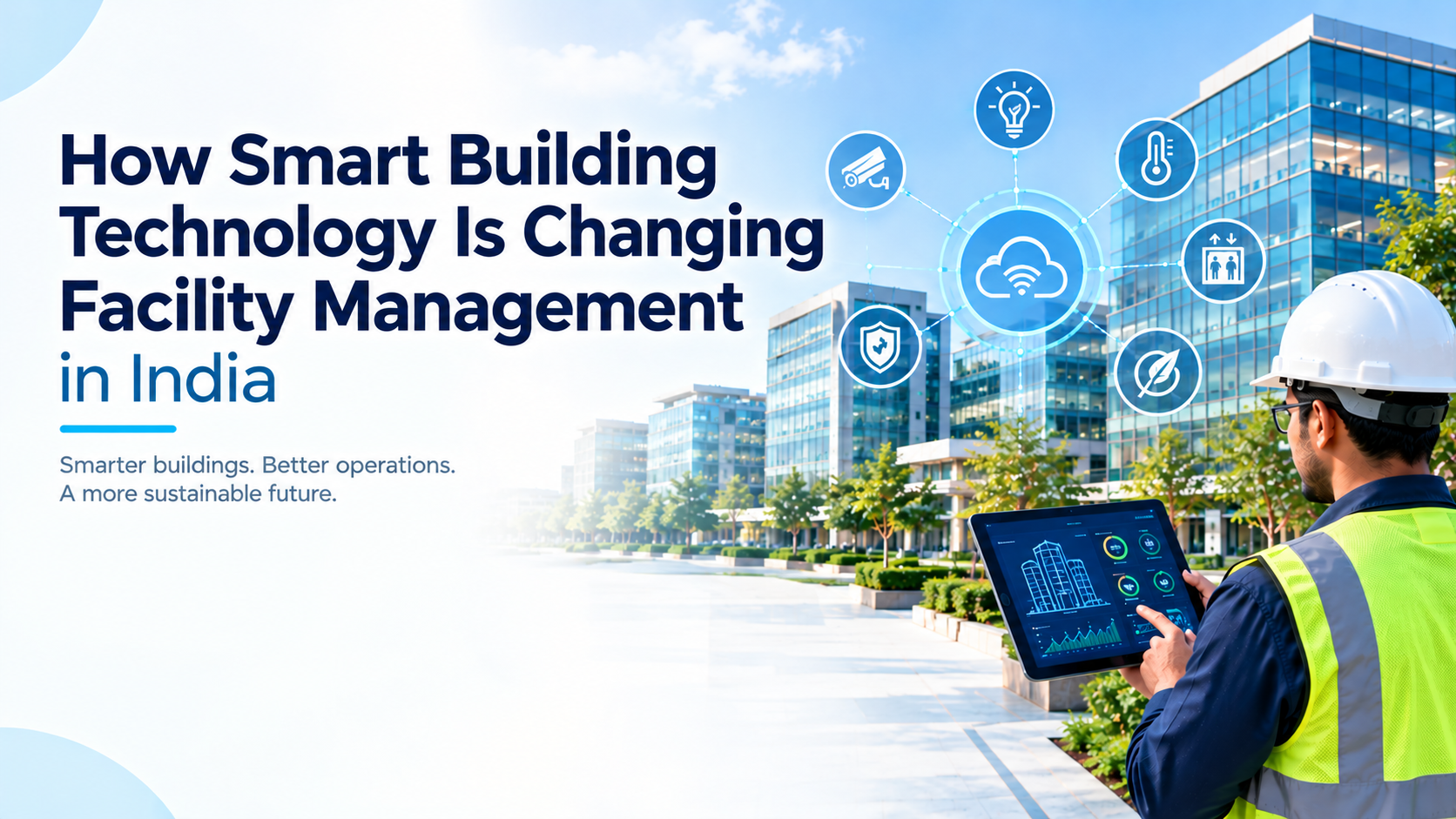
Smart building technology is changing how Indian commercial properties are run, moving facility management from reactive repairs to data-driven, predictive operations. Sensors, connected equipment, and centralised software now let teams see how a building performs in real time, fix problems before they spread, and cut energy waste without cutting comfort.
This guide explains what smart building technology is, which tools matter most, the benefits and challenges for Indian properties, and how to get started.
What Is Smart Building Technology?
Smart building technology is a set of connected sensors, controllers, and software that monitor and automate
building systems such as HVAC, lighting, power, water, security, and fire safety. Data from these systems flows into a central platform, often called a Building Management System (BMS), where it is analysed and acted on.
In simple terms, a smart building tells you what is wrong, where, and often why, before occupants notice a problem.
How Is Smart Technology Changing Facility Management in India?
Indian offices, malls, hospitals, campuses, and warehouses face rising energy costs, hot climates, and high occupancy. Smart technology addresses these pressures in five main ways:
- From reactive to predictive maintenance: Sensors track vibration, temperature, and runtime so teams service equipment before it fails.
- Energy optimisation: Automated controls adjust cooling and lighting based on occupancy and weather, which reduces power waste.
- Remote monitoring: One team can watch multiple sites from a central dashboard, including after hours.
- Faster response: Automated alerts and digital work orders reach technicians within minutes.
- Better reporting: Real-time data supports audits, sustainability reporting, and client reviews.
Which Smart Technologies Matter Most?
Technology | What it does | Facility benefit |
|---|---|---|
Building Management System | Centralises control of HVAC, lighting, and power | One view of the whole building |
IoT sensors | Measure temperature, humidity, air quality, leaks, and occupancy | Early fault detection |
Smart energy meters | Track consumption by floor or system | Pinpoint energy waste |
CMMS software | Schedules tasks, tracks assets, stores service history | Organised preventive maintenance |
Access control and CCTV analytics | Manage entry and monitor premises | Safer buildings |
AI and analytics | Spot patterns and predict failures | Lower downtime |
Predictive maintenance
Predictive maintenance is the biggest shift. Instead of servicing a chiller every few months regardless of condition, teams act on live performance data. This extends equipment life and reduces emergency breakdowns. Many property owners now look for facility management solutions that combine on-site expertise with this kind of monitoring.
Energy and sustainability
Energy is one of the largest running costs in Indian commercial buildings. Smart meters and automated controls show exactly where power is used and let teams schedule equipment around actual occupancy. This also helps properties meet the green building and ESG expectations of tenants and investors.
What Are the Benefits for Indian Commercial Properties?
Lower operating and energy costs
- Less unplanned downtime
- Longer asset life
- Better occupant comfort and indoor air quality
- Stronger safety and compliance records
- Transparent reporting for owners and tenants
What Challenges Come With Smart Building Adoption?
Technology alone does not fix a building. Common hurdles include:
- Upfront investment: Sensors, software, and integration need budget, though savings build over time.
- Legacy equipment: Older HVAC and electrical systems may need retrofits before they can connect.
- Skills gap: Teams need training to read data and act on it.
- Data security: Connected systems must be protected from unauthorised access.
- Disconnected vendors: Separate systems that do not talk to each other limit the value of the data.
The practical answer is a phased rollout with clear goals, not a full overhaul on day one.
What Does Smart Facility Management Look Like in Practice?
Consider a commercial tower with a central chiller plant. Temperature and pressure sensors send live readings to the BMS. When a pump starts drawing more power than usual, the system raises an alert and creates a work order automatically. A technician inspects the pump the same day, replaces a worn bearing, and logs the repair in the CMMS.
Without monitoring, that fault might have continued until the pump failed during peak summer. With it, the building avoids downtime, tenants stay comfortable, and the repair costs far less than an emergency replacement.
How Can a Property Start Its Smart Building Journey?
- Audit existing systems and identify the highest-cost or most failure-prone assets.
- Set clear goals, such as lower energy use or fewer breakdowns.
- Start with a pilot, for example, sensors on HVAC and energy meters on key floors.
- Choose open, interoperable platforms that can integrate with future systems.
- Train facility teams to use dashboards and respond to alerts.
- Review results every quarter and expand gradually.
Why Do People Still Matter in a Smart Building?
Smart systems generate alerts, but skilled technicians resolve them. Reliable facility management services pair technology with trained engineers, clear service levels, and on-ground accountability, so that data leads to action instead of ignored dashboards.
Key Takeaways
- Smart building technology connects sensors, equipment, and software for real-time control.
- Predictive maintenance and energy optimisation deliver the clearest returns.
- Start small with a pilot, then scale based on results.
- Technology works best when backed by skilled on-site teams.
Frequently Asked Questions
What is smart building technology in facility management?
It is the use of connected sensors, automation, and analytics to monitor and control building systems such as HVAC, power, lighting, and security from a central platform.
Is smart building technology only for large properties?
No. Smaller properties can begin with energy meters and HVAC monitoring, then add more systems as results justify the spend.
How does smart technology reduce maintenance costs?
It detects faults early, so repairs happen before major failures. This reduces emergency call-outs, extends equipment life, and avoids avoidable downtime.
Does a smart building still need an AMC?
Yes. Smart systems detect and report faults, but equipment still needs regular servicing and skilled repairs, which an Annual Maintenance Contract provides.
What should I look for in a facility management partner?
Look for experience with commercial properties, certified technicians, clear service levels, transparent reporting, and the ability to work with your existing systems.