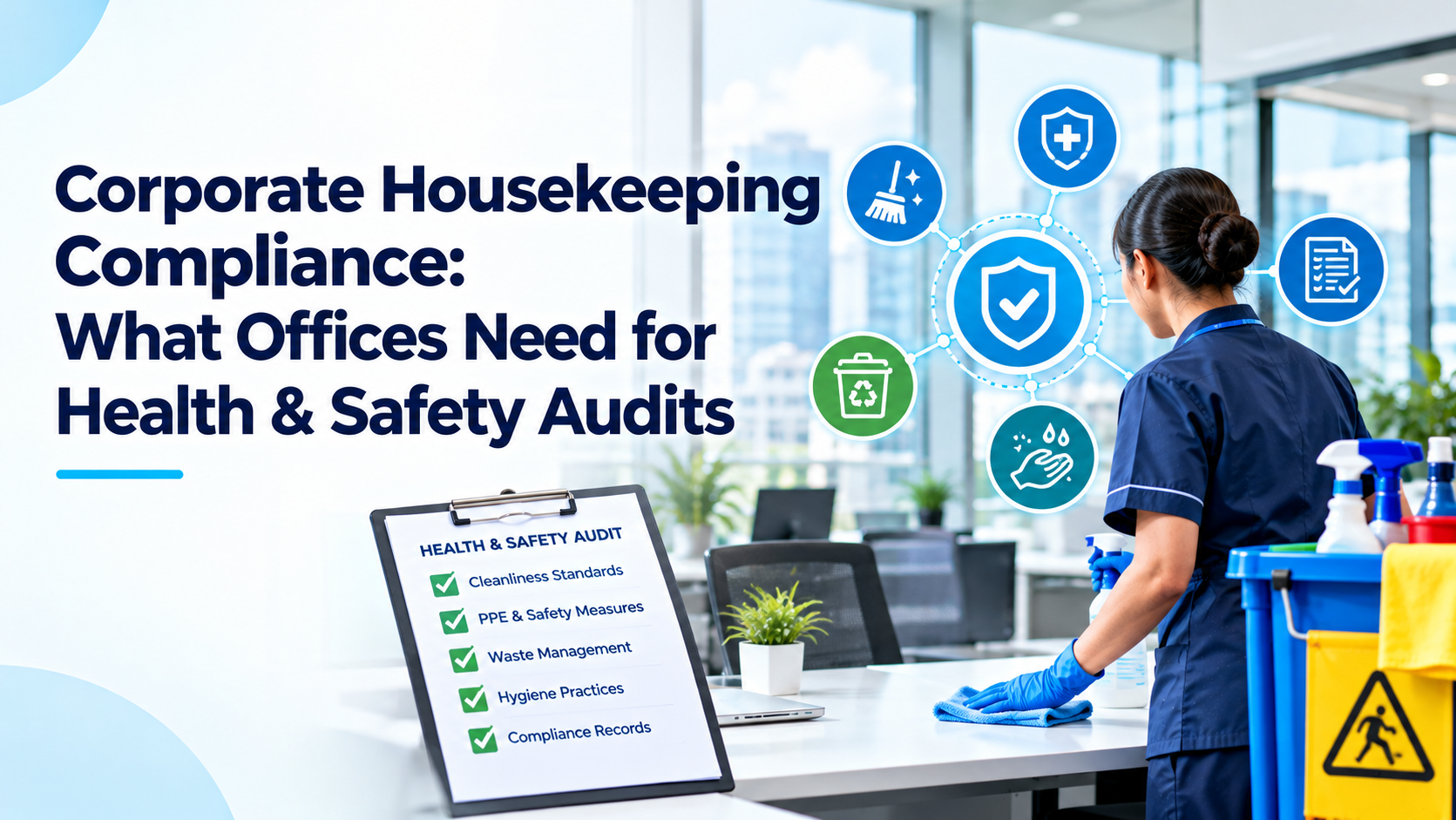
Corporate housekeeping compliance means keeping an office clean, hygienic, and safe in line with health and safety requirements, and being able to prove it with records. Auditors rarely judge cleanliness by sight alone. They look for documented schedules, trained staff, approved chemicals, proper waste handling, and evidence that problems get fixed. Working with professional corporate housekeeping services that already follow these standards makes audit readiness far easier.
This guide explains what auditors check, which documents you need, and how to prepare your office.
What Is Housekeeping Compliance in an Office?
Housekeeping compliance is the set of cleaning, hygiene, waste, and safety practices an office must follow to meet legal requirements, internal policies, and audit standards. It covers far more than clean floors. It includes safe chemical storage, clear walkways, pest control, washroom hygiene, waste segregation, and records proving each task was done.
Requirements vary by industry, city, and building type, so confirm the specifics with your EHS advisor or legal team.
Why Do Health and Safety Audits Look at Housekeeping?
Poor housekeeping is a direct cause of workplace incidents and health complaints. Auditors review it because it shows how well a company manages everyday risk:
- Slips, trips, and falls: Wet floors, loose cables, and cluttered corridors cause injuries.
- Fire risk: Blocked exits and accumulated waste increase fire hazards.
- Hygiene and infection control: Dirty washrooms, pantries, and high-touch surfaces spread illness.
- Chemical safety: Unlabelled or mixed chemicals can harm staff and cleaners.
- Pest control: Pests signal weak waste and food handling.
What Do Auditors Check in Office Housekeeping?
|
Audit area |
What auditors look for |
|---|---|
|
Cleaning schedules |
Daily, weekly, and monthly checklists with signatures and timestamps |
|
Washrooms and pantries |
Cleanliness, consumables, ventilation, and handwash availability |
|
Chemicals |
Labelled containers, safety data sheets, safe storage, correct dilution |
|
Waste management |
Segregated bins, regular disposal, and no overflow |
|
Walkways and exits |
Clear passages, dry floors, and visible signage |
|
Pest control |
Service records and sighting logs |
|
Staff and PPE |
Trained cleaning staff with gloves, masks, and uniforms |
|
Equipment |
Well-maintained machines and colour-coded tools |
Which Documents Should You Keep Ready?
Auditors trust records more than verbal assurances. Keep these documents current and easy to retrieve:
- Cleaning schedules and completed daily checklists
- Staff training and induction records
- Chemical inventory and safety data sheets
- Pest control service reports
- Waste disposal records
- Incident logs and corrective action reports
- Vendor agreement with scope of work and service levels
- Statutory records for cleaning staff, such as attendance and wages
Digital records are far easier to retrieve during an audit than paper registers.
How Do Professional Services Support Compliance?
In-house teams often struggle with training, supervision, and record keeping. Dedicated office housekeeping services bring trained staff, supervisors, standard checklists, and the right equipment, which turns compliance from a last-minute scramble into a routine. A good provider also manages supplies, replacements, and quality checks so standards stay consistent across shifts.
This is different from basic house cleaning services, which usually cover a home or small space with simple tasks. Offices need structured schedules, trained teams, and reporting that auditors can verify.
What Does a Compliant Daily Housekeeping Routine Look Like?
A compliant routine is simple, repeatable, and recorded. Most offices follow a pattern like this:
- Before office hours: Clean floors, workstations, washrooms, and pantries, and restock consumables.
- During the day: Spot-clean high-touch surfaces, empty bins, and respond to spills with warning signs.
- After office hours: Deep clean washrooms, remove waste, and secure chemicals and equipment.
- End of shift: Sign the checklist, note any issues, and report faults such as leaks or broken fittings.
Supervisors should review the checklist each day. A signed record, supported by a quick spot inspection, is the strongest evidence you can show an auditor.
How to Prepare Your Office for a Health and Safety Audit
- Run an internal walkthrough using a checklist based on the audit areas above.
- Fix visible issues first, such as clutter, blocked exits, overflowing bins, and leaking taps.
- Review chemical storage, labelling, and safety data sheets.
- Check that daily checklists are completed and signed.
- Confirm training records for every housekeeping staff member.
- Review pest control and waste disposal records for gaps.
- Brief staff on what to show and explain during the audit.
- Log corrective actions and close them with dates and evidence.
What Housekeeping Compliance Mistakes Should You Avoid?
- Cleaning well but failing to record it
- Mixing chemicals or using unlabelled spray bottles
- Ignoring high-touch surfaces such as door handles and lift buttons
- Rotating untrained staff without induction
- Missing pest control service reports
- Closing audit findings without proof of a fix
How Often Should Offices Review Housekeeping Compliance?
Run a short internal check every month, review records every quarter, and conduct a full audit at least once a year. Increase the frequency after any incident, complaint, or change in vendor, premises, or headcount.
Key Takeaways
- Auditors judge housekeeping by evidence, not appearance alone.
- Checklists, training records, and chemical documentation matter most.
- Trained teams and clear service levels make compliance repeatable.
- Monthly internal checks prevent last-minute audit surprises.
Frequently Asked Questions
What is housekeeping compliance?
It is the practice of meeting hygiene, safety, waste, and documentation requirements for cleaning and upkeep in an office, so that the company can pass health and safety audits.
Which documents do auditors usually ask for?
Common requests include cleaning checklists, training records, chemical safety data sheets, pest control reports, waste disposal records, and the housekeeping vendor agreement.
How often should an office be audited?
A monthly internal check, a quarterly record review, and at least one full audit each year is a practical routine for most offices.
Who is responsible for compliance, the company or the vendor?
Both. The vendor handles day-to-day execution under the agreement, but the company remains accountable for workplace safety and should supervise the work.
Is outsourced housekeeping better for audits?
Often yes. Professional providers bring trained staff, standard processes, and ready records, though the company should still verify quality regularly.