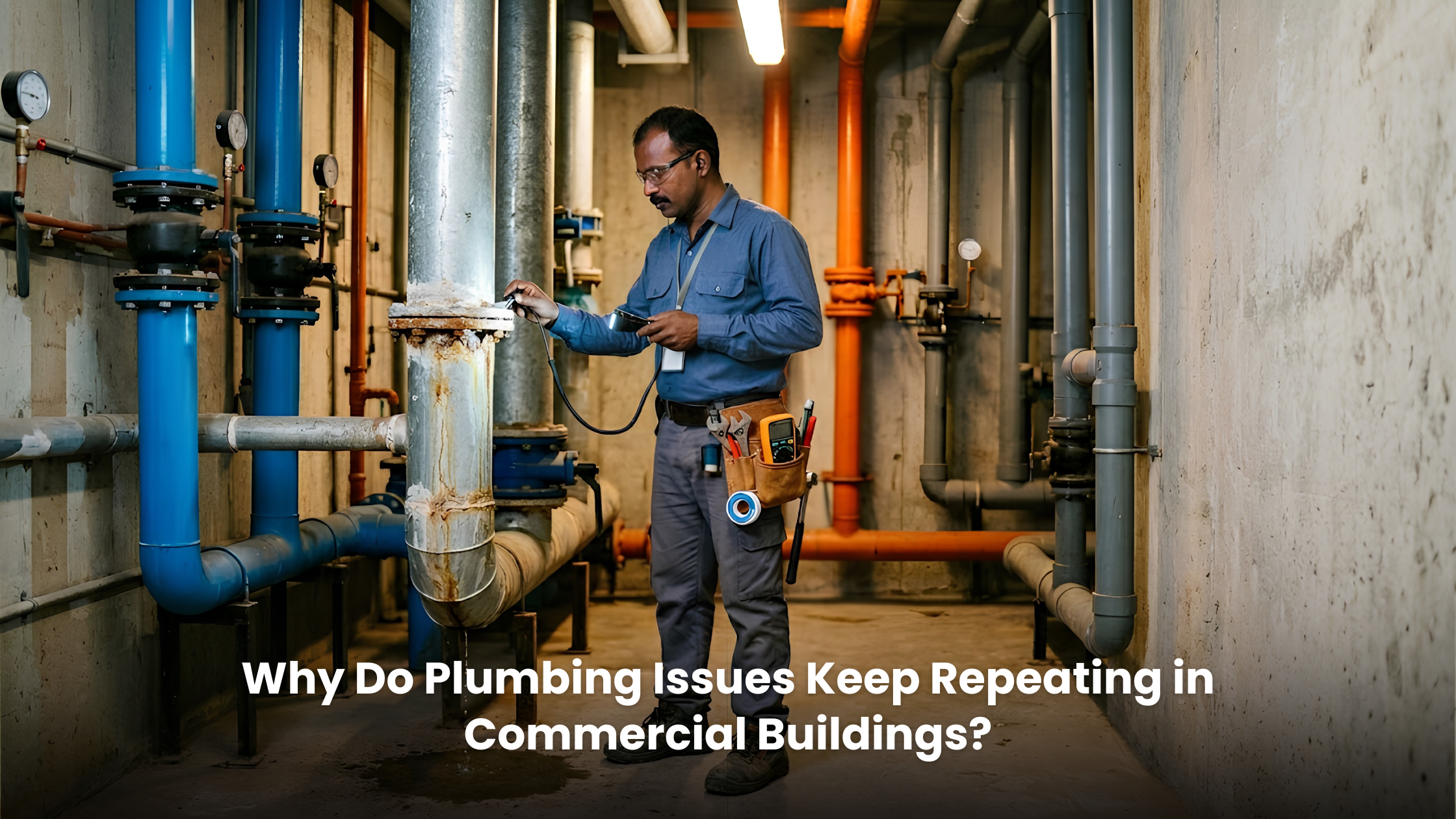
Why Do Plumbing Issues Keep Repeating in Commercial Buildings?
Plumbing systems are among the most critical yet overlooked components of any commercial property. Whether it’s an office complex, corporate campus, industrial facility, shopping center, or bank branch, recurring plumbing problems can disrupt daily operations, increase maintenance costs, and negatively impact workplace hygiene.
Many facility managers find themselves dealing with the same leaks, drain blockages, water pressure issues, or pipe failures repeatedly. While temporary fixes may restore functionality, they often fail to address the underlying cause of the problem.
At Virat Facility Management Services, we have found that recurring plumbing issues in commercial buildings are rarely caused by a single incident. Instead, they are usually the result of system abuse, inadequate maintenance, aging infrastructure, and reactive repair practices.
Let’s explore why these problems keep returning and how businesses can prevent them through proactive professional plumbing services.
The Hidden Cost of Recurring Plumbing Problems
A plumbing issue is rarely limited to a leaking pipe or clogged drain.
Repeated plumbing failures can lead to:
- Workplace disruptions
- Water damage to property and equipment
- Increased repair costs
- Health and hygiene concerns
- Reduced employee productivity
- Higher utility bills
- Regulatory compliance risks
This is why businesses should view plumbing maintenance as a strategic operational requirement rather than an occasional repair task.
Investing in reliable plumbing services helps organizations reduce downtime and avoid costly emergencies.
1. High Foot Traffic Creates Constant Stress on Plumbing Systems
Commercial buildings experience significantly higher plumbing usage compared to residential properties.
Office washrooms, cafeterias, pantry areas, and utility spaces are used by hundreds or even thousands of people every day.
Common Causes of System Abuse
Improper Waste Disposal
One of the most common causes of recurring drain blockages is the disposal of inappropriate materials into toilets and drainage systems.
Examples include:
- Paper towels
- Sanitary products
- Wet wipes
- Food waste
- Plastic materials
Even products marketed as “flushable” can create major obstructions when combined with other waste.
Grease Accumulation
Commercial kitchens and pantry areas often generate grease, oils, and food particles that gradually accumulate inside drainage lines.
Over time, these deposits restrict water flow and cause recurring blockages.
Without regular cleaning and maintenance, the same plumbing problems continue to reappear.
This is why experienced plumbing service providers recommend preventive drain maintenance rather than waiting for complete system failure.
2. Businesses Often Treat Symptoms Instead of Root Causes
One of the biggest reasons plumbing issues keep recurring is that many repairs focus only on immediate symptoms.
For example, a blocked drain may be cleared temporarily, but the underlying issue remains unresolved.
Why Quick Fixes Fail
Traditional drain cleaning methods may remove a portion of the blockage without addressing:
- Internal pipe buildup
- Grease accumulation
- Structural pipe damage
- Improper pipe gradients
- Hidden obstructions
As a result, the blockage gradually reforms and causes another service call within weeks or months.
The Importance of Root Cause Analysis
Professional plumbing services should include thorough system inspections to identify the actual source of recurring issues.
Modern diagnostic techniques such as:
- CCTV pipe inspections
- Drain mapping
- Hydro jet cleaning
- Pressure testing
allow technicians to detect hidden problems before they become major failures.
At Virat Facility Management Services, we emphasize preventive maintenance because solving the root cause is always more cost-effective than repeatedly addressing symptoms.
3. Aging Plumbing Infrastructure Creates Ongoing Problems
Many commercial buildings continue to operate with aging plumbing systems that were installed decades ago.
Over time, pipes naturally deteriorate due to wear, corrosion, pressure fluctuations, and environmental conditions.
Common Infrastructure Challenges
Pipe Corrosion
Older metal pipes can develop rust and internal scaling that restrict water flow and increase the likelihood of leaks.
Joint Failures
Pipe joints are often vulnerable to:
- Water pressure changes
- Building movement
- Vibration
- Long-term wear and tear
As these joints weaken, recurring leaks and maintenance issues become increasingly common.
Material Degradation
Outdated plumbing materials may no longer meet modern performance standards and can become prone to frequent breakdowns.
Professional plumber service providers often recommend periodic inspections and phased infrastructure upgrades to prevent recurring failures and extend system life.
4. Lack of Preventive Maintenance Programs
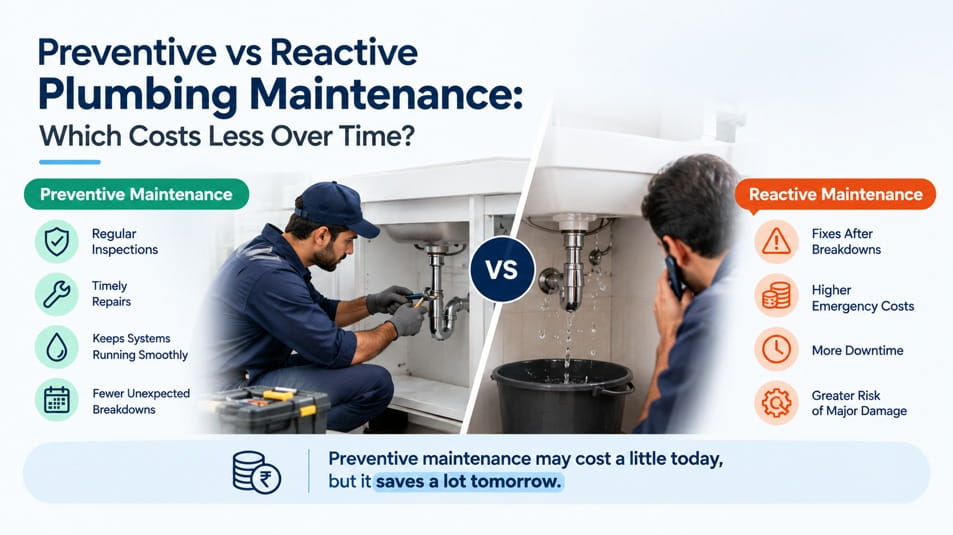
Many organizations only call a plumber after a problem occurs.
This reactive approach increases both operational risks and long-term maintenance expenses.
Why Preventive Maintenance Matters
Regular inspections help identify:
- Minor leaks
- Pipe corrosion
- Drain buildup
- Pressure imbalances
- Equipment wear
before they develop into expensive emergencies.
Preventive professional plumbing services help organizations:
- Reduce repair costs
- Improve system reliability
- Extend asset lifespan
- Maintain workplace hygiene
- Avoid unexpected downtime
For commercial properties, routine maintenance is often significantly less expensive than emergency plumbing repairs.
5. Multi-Tenant Buildings Often Face Responsibility Gaps
In commercial complexes with multiple tenants, plumbing responsibilities are frequently divided between building management and individual occupants.
This can create confusion regarding:
- Maintenance schedules
- Repair responsibilities
- Drain cleaning
- Leak reporting
- Infrastructure upgrades
When issues are not addressed promptly, minor problems can spread throughout the plumbing network and become recurring concerns.
Clear communication, defined responsibilities, and scheduled inspections are essential to maintaining efficient plumbing operations across shared facilities.
How Businesses Can Prevent Recurring Plumbing Issues
The most effective strategy is a proactive maintenance approach supported by experienced plumber service providers.
Organizations should focus on:
- Scheduled plumbing inspections
- Preventive maintenance programs
- CCTV pipeline assessments
- Drain cleaning and hydro jetting
- Leak detection systems
- Employee awareness initiatives
- Infrastructure modernization plans
By addressing potential issues early, businesses can significantly reduce operational disruptions and repair costs.
Final Thoughts
Recurring plumbing problems are rarely random events. They are often warning signs of deeper issues within a building’s plumbing infrastructure, maintenance practices, or usage patterns.
High foot traffic, aging systems, reactive repairs, and inconsistent maintenance all contribute to ongoing plumbing failures.
At Virat Facility Management Services, we provide comprehensive plumbing services designed to help businesses move beyond temporary fixes and implement long-term solutions. Through preventive maintenance, advanced diagnostics, and experienced technical teams, we help organizations maintain reliable plumbing systems that support smooth business operations.
When it comes to commercial facilities, investing in proactive professional plumbing services is not just about preventing leaks—it’s about protecting productivity, workplace safety, and long-term operational efficiency.